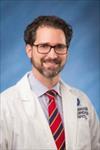
Larry D. Hartzell
Assistant Professor
Also affiliated: Arkansas Children's Hospital (2010–2026); Arkansas Children's Research Institute (2010–2011)
Otolaryngology, College of Medicine
Research Areas
Biomedical Subjects
Biography and Research Information
OverviewAI-generated summary
Dr. Larry Hartzell's research focuses on pediatric otolaryngology, with a particular emphasis on conditions affecting children with cleft lip and palate. He has directed the cleft team at Arkansas Children's Hospital since 2012, indicating a sustained commitment to this patient population. His work has involved investigating various aspects of pediatric head and neck conditions, including chronic rhinosinusitis, microtia and related facial anomalies, and infantile hemangiomas.
Dr. Hartzell has also explored surgical interventions and their outcomes in children. This includes studies on tongue base suspension for obstructive sleep apnea in children with cerebral palsy, and the timing of tympanoplasty for chronic otitis media with effusion. His research extends to the healing of tracheostomy wounds, employing specific compounds in a pilot study, and assessing the quality of life in children with congenital laryngomalacia.
His academic contributions include numerous peer-reviewed articles and book chapters. Dr. Hartzell is board-certified by the American Board of Otolaryngology – Head and Neck Surgery and is recognized as a Certified Complex Pediatric Otolaryngologist. He holds an h-index of 12 with 45 total publications and 434 citations.
Research Overview
Dr. Larry Hartzell attended Brigham Young University where he received his undergraduate degree in Zoology with a human biology emphasis. He spent 2 years as a missionary for his Church in Colombia where he became fluent in Spanish. Dr. Hartzell earned his medical degree at The University of Arizona College of Medicine. He completed a residency in Otolaryngology (ENT) at the University of Arkansas for Medical Sciences. He then completed fellowship training in Pediatric Otolaryngology at Arkansas Children's Hospital (ACH). He has been the director of the cleft team at ACH since 2012. Dr. Hartzell is an active participant in multiple local as well as national committees and is academically active with many peer reviewed articles in addition to book chapters and other publications. He is board certified by the American Board of Otolaryngology – Head and Neck Surgery and is a Certified Complex Pediatric Otolaryngologist. He is a member of numerous medical organizations, including the American Academy of Pediatrics, American Cleft Palate-Craniofacial Association, American Academy of Facial Plastic and Reconstructive Surgery and the American Academy of Otolaryngology, Head and Neck Surgery. His major research interests include cleft lip and palate medical and surgical management as well as velopharyngeal insufficiency. Dr. Hartzell has a strong interest in medical humanitarian mission efforts and has participated in humanitarian efforts in China, Guatemala, Egypt and Ecuador. He is a Professor of Otolaryngology and also the Program Director of the Pediatric Otolaryngology Fellowship at Arkansas Children's Hospital. He also provides surgical care at Arkansas Children's Northwest.
Metrics
- h-index: 12
- Publications: 46
- Citations: 436
Positions
-
Assistant Professor 2012–presentUniversity of Arkansas for Medical Sciences Otolaryngology, College of Medicine Institutional directory
Selected Publications
-
Clicking larynx syndrome in an adolescent patient following trauma: A case report and review of current literature (2026)
-
Surgical Repair of Unilateral Cleft Alveolus Using Viable Bone Allograft in Pediatrics: A Case Report (2025)
-
Evaluating Geographic Distribution and Potential Environmental Risk Factors of Orofacial Cleft Anomalies Utilizing a Statewide Birth Defects Registry (2025)
-
Myringoplasty Using Human Birth Tissue Allografts to Repair Large Tympanic Membrane Perforations (2024)
-
Is There Utility in Preoperative Testing of Hemoglobin Before Primary Cheiloplasty? (2024)
-
Improved Confidence and Clinical Application: The Effects of a Longitudinal Suture Curriculum for Medical Students (2023)
-
Outcomes After Pharyngeal Flap Surgery in Children: A Comparison of Lined Versus Unlined Flaps (2023)
-
Quantitative Phenotype Morbidity Description of SATB2-Associated Syndrome (2023)
-
P369: SATB2-associated syndrome severity score: Genotype/phenotype correlations and the SATB2 portal (2023)
-
The First Hybrid International Educational Comprehensive Cleft Care Workshop (2022)
-
Retrospective Examination of the GILLS Algorithm Applied to Mandibular Distraction (2021)
-
Clinical Significance of Screening Electrocardiograms for the Administration of Propranolol for Problematic Infantile Hemangiomas (2021)
-
Detection of Respiratory Pathogens Does Not Predict Risks After Outpatient Adenotonsillectomy (2020)
-
Multicenter Interrater Reliability in the Endoscopic Assessment of Velopharyngeal Function Using a Video Instruction Tool (2019)
-
The Arkansas Tessier Number 3 Cleft Experience: Soft Tissue and Skeletal Findings With Primary Surgical Management: Four-Step Approach (2018)
Research Interests
Dr. Hartzell’s first exposure to research was during his undergraduate study years at Brigham Young University. He was able to participate in multiple projects in a chemistry laboratory during that time, mostly related to ancient Egyptian Mummies, which exposed him to much of the bench-top research techniques and protocols. His research experience continued in medical school at the University Of Arizona College Of Medicine where he took the opportunity to apply for an NIH student grant that allowed him to once again work in a chemistry lab. This time he studied the brown recluse spider and its relatives isolating the active enzyme in their venom. Upon entering residency in Otolaryngology Head and Neck Surgery and UAMS, Dr. Hartzell sought out opportunities to further engage in research and was able to become involved with multiple clinical research projects that led to publication and podium presentations as well as posters. This played a part in motivating Dr. Hartzell to pursue his academic interests in fellowship and future employment in the academic institution of UAMS. Dr. Hartzell was productive as a fellow participating in some international meetings and this expanded as he became faculty at UAMS. As a busy clinician, much of Dr. Hartzell’s time has been dedicated to direct patient care as well as his administrative duties as cleft team director and fellowship director among other things. As a result, the amount of time that he has been able to dedicate solely to research has been unfortunately limited. However, through working with students and trainees of multiple levels, Dr. Hartzell has been able to continue to be academically active in the research arena. He continues to present at national and international meetings on the clinical work he is engaged in and the students, residents and fellows he has mentored in this process. His biggest research accomplishments have been the development and maintenance of a new cleft and craniofacial database to allow for quality improvement projects as well as data for a myriad of possible scientific protocols and projects. This is actively being populated and studies generated from this database.
Collaboration Network
Top Collaborators
- Dental radiographic findings in 18 individuals with SATB2-associated syndrome
- The Arkansas Tessier Number 3 Cleft Experience: Soft Tissue and Skeletal Findings With Primary Surgical Management: Four-Step Approach
- Retrospective Examination of the GILLS Algorithm Applied to Mandibular Distraction
- Quantitative Phenotype Morbidity Description of SATB2-Associated Syndrome
- Detection of Respiratory Pathogens Does Not Predict Risks After Outpatient Adenotonsillectomy
Showing 5 of 9 shared publications
- Tongue base suspension in children with cerebral palsy and obstructive sleep apnea
- Enhanced Tracheostomy Wound Healing Using Maltodextrin and Silver Alginate Compounds in Pediatrics: A Pilot Study
- Accuracy and Safety of Tracheoscopy for Infants in a Tertiary Care Clinic
- Detection of Respiratory Pathogens Does Not Predict Risks After Outpatient Adenotonsillectomy
- Clinical Significance of Screening Electrocardiograms for the Administration of Propranolol for Problematic Infantile Hemangiomas
Showing 5 of 6 shared publications
- Dental radiographic findings in 18 individuals with SATB2-associated syndrome
- Combined Tongue-Palate Fusion With Alveolar Bands in a Patient With Pierre Robin Sequence and Van der Woude Syndrome
- Quantitative Phenotype Morbidity Description of SATB2-Associated Syndrome
- P369: SATB2-associated syndrome severity score: Genotype/phenotype correlations and the SATB2 portal
- Tongue base suspension in children with cerebral palsy and obstructive sleep apnea
- Enhanced Tracheostomy Wound Healing Using Maltodextrin and Silver Alginate Compounds in Pediatrics: A Pilot Study
- Accuracy and Safety of Tracheoscopy for Infants in a Tertiary Care Clinic
- Timing of tympanoplasty in children with chronic otitis media with effusion
- Cerebellopontine angle tumor in a patient with a maternally inherited SDHD gene mutation.
- Cartilage Tympanoplasty in Children With Cleft Palate Repair
- Dental radiographic findings in 18 individuals with SATB2-associated syndrome
- Quantitative Phenotype Morbidity Description of SATB2-Associated Syndrome
- P369: SATB2-associated syndrome severity score: Genotype/phenotype correlations and the SATB2 portal
- Quantitative Phenotype Morbidity Description of SATB2-Associated Syndrome
- Outcomes After Pharyngeal Flap Surgery in Children: A Comparison of Lined Versus Unlined Flaps
- P369: SATB2-associated syndrome severity score: Genotype/phenotype correlations and the SATB2 portal
- Free Tissue Reconstruction Following Excision of Head and Neck Arteriovenous Malformations
- Free Tissue Reconstruction Following Excision of Head and Neck Arteriovenous Malformations
- Free Tissue Reconstruction Following Excision of Head and Neck Arteriovenous Malformations
- Free Tissue Reconstruction Following Excision of Head and Neck Arteriovenous Malformations
- Free Tissue Reconstruction Following Excision of Head and Neck Arteriovenous Malformations
- Free Tissue Reconstruction Following Excision of Head and Neck Arteriovenous Malformations
- Free Tissue Reconstruction Following Excision of Head and Neck Arteriovenous Malformations
- Free Tissue Reconstruction Following Excision of Head and Neck Arteriovenous Malformations
- Combined Tongue-Palate Fusion With Alveolar Bands in a Patient With Pierre Robin Sequence and Van der Woude Syndrome
- Is There Utility in Preoperative Testing of Hemoglobin Before Primary Cheiloplasty?
- Dental radiographic findings in 18 individuals with SATB2-associated syndrome
- Quantitative Phenotype Morbidity Description of SATB2-Associated Syndrome
- The Arkansas Tessier Number 3 Cleft Experience: Soft Tissue and Skeletal Findings With Primary Surgical Management: Four-Step Approach
- Clinical Significance of Screening Electrocardiograms for the Administration of Propranolol for Problematic Infantile Hemangiomas
- Retrospective Examination of the GILLS Algorithm Applied to Mandibular Distraction
- Detection of Respiratory Pathogens Does Not Predict Risks After Outpatient Adenotonsillectomy
Similar Researchers
Based on overlapping research topics